
If you love sushi but don’t love the time, cost, or effort that comes with rolling it, this Spicy Salmon Sushi Rice Bowl might become your new favorite meal. It has everything people love about spicy salmon rolls—tender salmon, fluffy sushi rice, creamy spicy sauce, and fresh toppings—all layered into one easy bowl.
I’ve been cooking and testing recipes for about 5 years, and sushi bowls are among the meals I keep coming back to. They deliver restaurant-quality flavor without requiring special skills. Whenever I want something fresh, satisfying, and a little impressive without spending hours in the kitchen, this Spicy Salmon Sushi Rice Bowl is usually at the top of my list.
The best part? It’s incredibly customizable. Add your favorite vegetables, adjust the spice level, and make every bowl exactly how you like it.
Why You’ll Love This Recipe
This recipe combines the flavors of your favorite sushi roll with the convenience of a rice bowl. It’s quick enough for busy weeknights but special enough for a weekend dinner. The spicy salmon adds a rich, savory kick while the fresh vegetables bring crunch and balance. Even picky eaters can customize their own bowl, making it a family-friendly meal everyone can enjoy.
Ingredients You’ll Need
For the Sushi Rice
- 2 cups cooked sushi rice
- 2 tablespoons rice vinegar
- 1 teaspoon sugar
- ½ teaspoon salt
- For the Salmon
- 1 pound salmon fillet, skin removed and cut into bite-sized cubes
- 1 tablespoon soy sauce
- 1 teaspoon sesame oil
- For the Spicy Sauce
- 3 tablespoons mayonnaise
- 1 tablespoon sriracha (adjust to taste)
- 1 teaspoon soy sauce
Toppings
- 1 avocado, sliced
- 1 cup cucumber, diced
- 1 medium carrot, julienned
- 1 sheet of nori, cut into thin strips
- 1 tablespoon sesame seeds
- 2 green onions, thinly sliced
- 1 teaspoon furikake seasoning (optional)
Sushi rice, rice vinegar, sugar, salt, salmon, soy sauce, sesame oil, mayonnaise, sriracha, avocado, cucumber, carrot, nori, sesame seeds, green onions, and furikake seasoning.
Equipment Needed
- Medium saucepan or rice cooker
- Mixing bowls
- Sharp knife
- Cutting board
- Nonstick skillet or frying pan
- Measuring spoons
How Do You Make Spicy Salmon Sushi Rice Bowl?
Step 1: Prepare the Sushi Rice
Cook the sushi rice according to package instructions if it isn’t already cooked. While it’s still warm, gently mix in the rice vinegar, sugar, and salt. Set aside to cool slightly.
Step 2: Make the Spicy Sauce
In a small bowl, combine the mayonnaise, sriracha, and soy sauce. Stir until smooth. Taste and adjust the spice level if needed.
Step 3: Season the Salmon
Place the salmon cubes in a bowl. Add the soy sauce and sesame oil. Toss gently until the salmon is evenly coated.
Step 4: Cook the Salmon
Heat a nonstick skillet over medium-high heat. Add the salmon cubes and cook for about 2 to 3 minutes per side. The salmon should be lightly browned on the outside and flaky on the inside. Avoid overcooking.
Step 5: Prepare the Toppings
Slice the avocado, dice the cucumber, julienne the carrot, and chop the green onions while the salmon cooks.
Step 6: Assemble the Bowls
Divide the sushi rice between four serving bowls. Arrange the cooked salmon, avocado, cucumber, carrot, and other toppings around the bowl.
Step 7: Add the Finishing Touches
Drizzle the spicy sauce over the salmon and toppings. Sprinkle with sesame seeds, green onions, nori strips, and furikake if using.
Step 8: Serve and Enjoy
Serve immediately while the salmon is warm and the vegetables are crisp.
Common Mistakes to Avoid
Overcooking the Salmon
Salmon cooks quickly. Leaving it on the heat too long can make it dry and less flavorful.
Using Hot Rice for Assembly
Very hot rice can soften the vegetables and avocado. Let it cool slightly before building the bowl.
Adding Too Much Sauce
The spicy sauce is flavorful. Start with a little and add more if needed.
Skipping the Rice Seasoning
The vinegar mixture gives sushi rice its signature flavor. Don’t skip this step.
Cutting Uneven Salmon Pieces
Uniform cubes cook more evenly and look better in the finished bowl.
Pro Tips
After making this recipe many times, I’ve found that slightly chilling the prepared toppings creates the best contrast with the warm salmon and rice. Fresh salmon from a trusted source always delivers the best flavor. If you’re short on time, pre-shredded carrots work perfectly. For extra texture, add crispy onions or crunchy wonton strips. A squeeze of fresh lime right before serving can make the flavors pop even more.
Serving Suggestions
This bowl is satisfying on its own, but it pairs beautifully with miso soup, seaweed salad, edamame, or lightly steamed vegetables. For a restaurant-style meal at home, serve it with green tea or sparkling water with citrus slices.
Storage & Reheating Instructions
Store leftover salmon and rice separately from the fresh toppings whenever possible. Keep everything in airtight containers in the refrigerator for up to 2 days. The salmon and rice can be reheated gently in the microwave until warmed through. Fresh toppings are best added just before serving. Freezing is not recommended because the vegetables and avocado lose their texture.
Spicy Salmon Sushi Rice Bowl
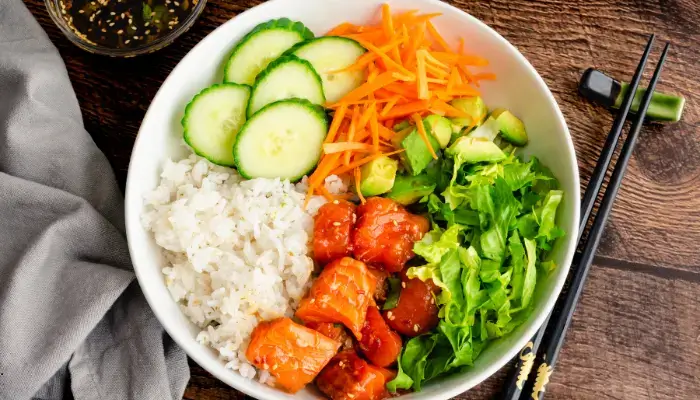
A fresh and flavorful sushi-inspired rice bowl featuring tender salmon, seasoned sushi rice, creamy spicy sauce, and crunchy vegetables. Perfect for a quick weeknight meal.
Ingredients
- 2 cups cooked sushi rice
- 2 tablespoons rice vinegar
- 1 teaspoon sugar
- ½ teaspoon salt
- 1 pound salmon fillet, skin removed and cut into cubes
- 1 tablespoon soy sauce
- 1 teaspoon sesame oil
- 3 tablespoons mayonnaise
- 1 tablespoon sriracha
- 1 teaspoon soy sauce
- 1 avocado, sliced
- 1 cup cucumber, diced
- 1 medium carrot, julienned
- 1 sheet nori, cut into strips
- 1 tablespoon sesame seeds
- 2 green onions, sliced
- 1 teaspoon furikake seasoning (optional)
Instructions
- Cook sushi rice according to package directions.
- Mix rice vinegar, sugar, and salt into the warm rice.
- In a small bowl, combine mayonnaise, sriracha, and soy sauce to make the spicy sauce.
- Toss salmon cubes with soy sauce and sesame oil.
- Cook salmon in a skillet over medium-high heat for 2 to 3 minutes per side.
- Prepare avocado, cucumber, carrot, and green onions.
- Divide rice among serving bowls.
- Arrange salmon and toppings over the rice.
- Drizzle with spicy sauce.
- Garnish with sesame seeds, nori strips, green onions, and furikake.
- Serve immediately.
Notes
Adjust the amount of sriracha to control the heat level. For extra crunch, add crispy onions or wonton strips. Fresh salmon provides the best flavor and texture.
Nutrition Information
Yield
4Serving Size
4Amount Per Serving Calories 2380Total Fat 128gSaturated Fat 21gUnsaturated Fat 107gCholesterol 298mgSodium 5678mgCarbohydrates 182gFiber 15gSugar 32gProtein 120g
Note: Nutritional values are automated estimates and may vary. Please use your preferred calculator for exact counts.
Final Thoughts
This Spicy Salmon Sushi Rice Bowl delivers all the flavors of your favorite sushi roll in a simple, approachable meal. It’s fresh, satisfying, and surprisingly easy to make at home. Give it a try, and don’t be surprised if it becomes part of your regular dinner rotation.
Frequently Asked Questions
How do I make this recipe less spicy?
Simply reduce the amount of sriracha in the sauce. You can also replace some of the sriracha with extra mayonnaise for a milder flavor.
Can I use canned salmon instead of fresh salmon?
Yes. Canned salmon works well when you’re short on time. Drain it well and mix it directly with the spicy sauce.
What is the best rice for a sushi rice bowl?
Short-grain sushi rice is the best choice because it has the sticky texture traditionally used in sushi dishes. It holds together well and absorbs flavor beautifully.